

Kidney Stones: Why They Are Dangerous, Symptoms, Causes, and Modern Treatment
Kidney stones (urolithiasis) are one of the most common urological conditions. Stones form from mineral salts in the kidneys and urinary tract. Without timely diagnosis and treatment, the disease can lead to serious complications—from severe pain to kidney failure. This article explains how stones form, how to recognize the problem, and what treatment options modern medicine offers.
Symptoms of kidney stones: when to see a doctor
Kidney stones may remain asymptomatic for a long time, but as a stone moves, characteristic signs appear: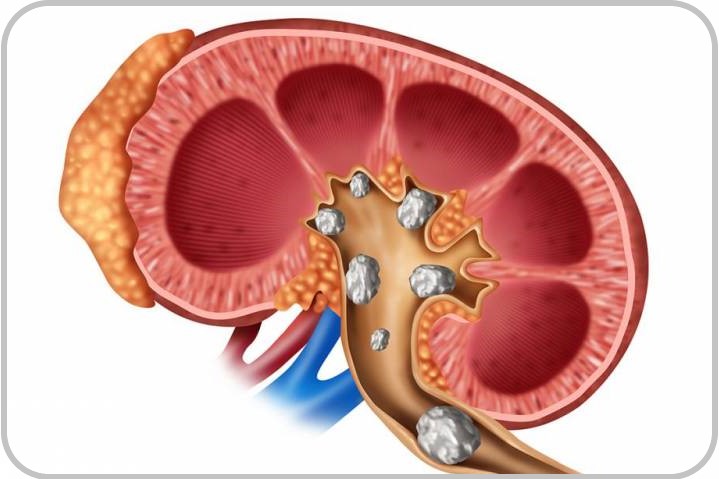
-
Acute pain in the lower back or side, radiating to the lower abdomen and groin.
-
Painful or difficult urination, frequent urges.
-
Changes in urine color, blood in the urine, cloudiness.
-
If infection develops—fever, chills, nausea.
If these symptoms appear, consultation with a urologist is necessary—only a doctor can make an accurate diagnosis and prevent dangerous consequences.
Causes of stone formation
Kidney stones develop under the influence of many factors:
-
Lack of fluid—urine becomes concentrated and salts crystallize.
-
Poor diet—excess animal protein, salt, sugar, and oxalates.
-
Metabolic disorders—elevated calcium, urates, and oxalates in urine.
-
Genetic predisposition and structural features of the urinary tract.
-
Hormonal imbalances, thyroid disease, long-term use of certain medications.
Understanding the causes helps prevent recurrence. That is why a urologist always clarifies the patient’s lifestyle and eating habits.
Why kidney stones are dangerous: complications
Stones are not just a discomfort. Dangerous consequences of urolithiasis include:
-
Obstruction of the urinary tract—a stone blocks urine outflow, causing acute retention and increased pain. This condition requires emergency care.
-
Urinary tract infection—urine stagnation creates an environment for bacterial growth. The risk of pyelonephritis and even sepsis increases.
-
Kidney failure—prolonged impaired urine outflow damages kidney tissue.
-
Bleeding—sharp edges of a stone can injure blood vessels.
Clinical example. A 45-year-old patient consulted a urologist with severe pain in the right side and a fever of 38.5°C. Ultrasound revealed an 8 mm stone in the right ureter that had blocked urine outflow and caused acute pyelonephritis. Because the patient sought help late, infection developed, requiring emergency hospitalization, stent placement, and antibiotic therapy. After stone removal and treatment, kidney function recovered, but the patient could have avoided complications by seeing a doctor at the first symptoms.
Treatment methods for kidney stones
Treatment tactics depend on the size, composition, and location of the stone:
-
Lithotripsy—remote destruction of stones with ultrasound waves (for small stones).
-
Endoscopic removal—an instrument is inserted through the urinary tract and the stone is removed.
-
Surgery (laparoscopy, nephrolithotomy)—for large or complex stones.
The choice of method should be determined by a qualified urologist after a complete examination. Self-treatment is unacceptable—it can worsen the condition.
Prevention and conclusions
To reduce the risk of urolithiasis, drink enough water (1.5–2 L per day), limit salt and animal protein, and have regular checkups. At the first signs, do not delay a visit to a urologist—early diagnosis helps avoid dangerous complications and preserve kidney health.
About neck pain.
Keywords: kidney stones, urolithiasis, kidney stone symptoms, kidney stone treatment, urologist, lithotripsy, kidney stone complications