

Esophageal Cancer: Early Signs, Risk Factors, Diagnosis and Treatment
Esophageal cancer is one of the most aggressive malignant diseases, often remaining asymptomatic for a long time. Early detection significantly increases the chances of successful treatment, so knowing the first symptoms and risk factors is vital.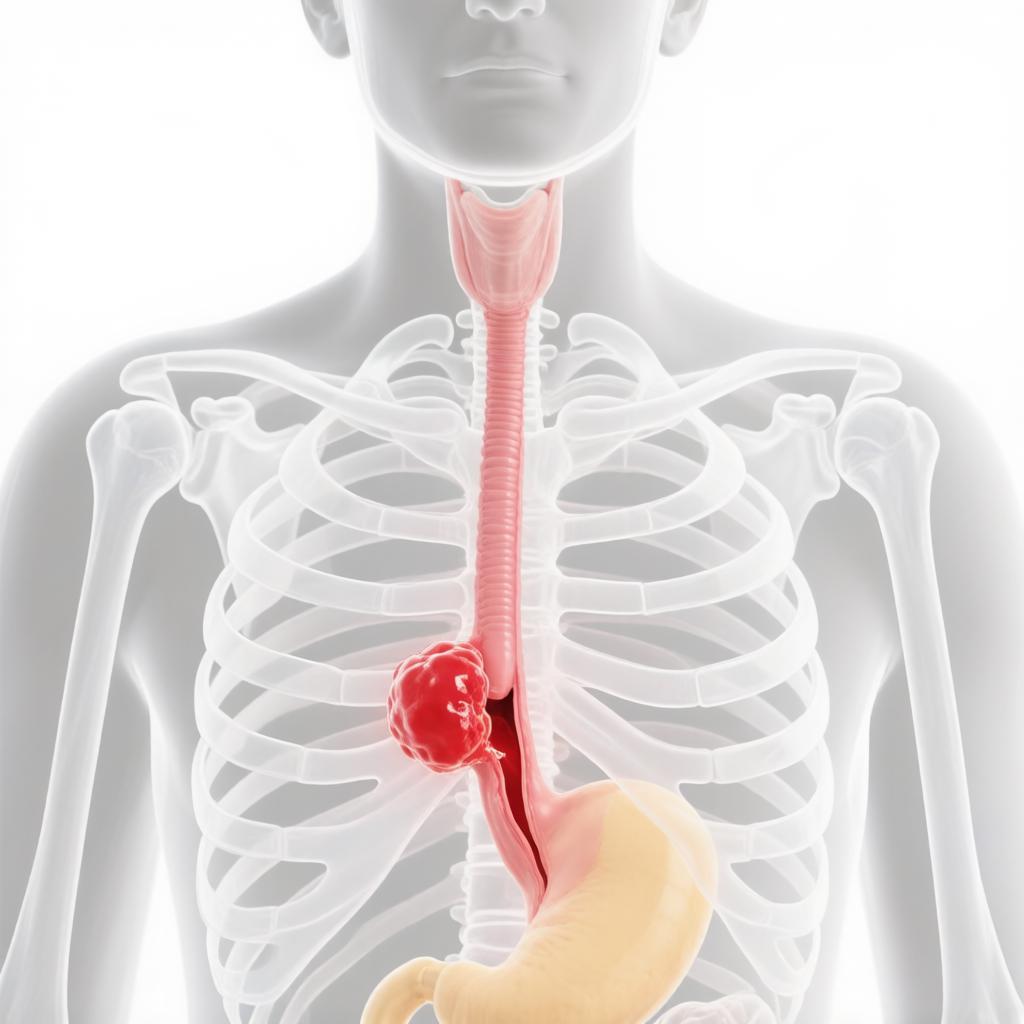
This article covers:
-
how common esophageal cancer is;
-
who is at risk;
-
warning symptoms;
-
diagnostic methods used by oncologists and surgeons;
-
modern treatment approaches.
How common is esophageal cancer?
It accounts for less than 1% of all malignancies but is highly aggressive. Most often diagnosed in men over 60. Main risk factors:
-
alcohol abuse;
-
smoking;
-
long‑term gastroesophageal reflux disease (GERD);
-
Barrett’s esophagus (precancerous condition);
-
consuming very hot, spicy, and rough food;
-
family history.
Earliest signs of esophageal cancer:
Early symptoms are often nonspecific but require immediate medical attention:
-
Dysphagia (difficulty swallowing) – feeling that food «sticks» behind the sternum, needing water to wash it down.
-
Pain or discomfort behind the sternum when swallowing.
-
Regurgitation – backflow of food from stomach to oesophagus.
-
Heartburn and belching of swallowed food.
-
Unexplained weight loss.
-
Coughing up blood, frequent vomiting urges.
-
Anaemia, weakness, general malaise – non‑specific signs appearing at later stages.
Important: most symptoms appear at stages 3–4, when surgery is often impossible. Therefore, people with risk factors should undergo regular check‑ups.
Who should be examined regularly?
Special attention is needed if you:
-
are over 50;
-
smoke or abuse alcohol;
-
have Barrett’s oesophagus;
-
have long‑standing GERD;
-
have close relatives with oesophageal cancer.
Such patients are advised to undergo fibrogastroduodenoscopy (FGDS) at least once a year, and those with Barrett’s oesophagus – annually with biopsy.
Diagnosis:
The main method is oesophagogastroduodenoscopy (OGD) with biopsy of suspicious areas. Additional methods:
-
Barium swallow X‑ray – to assess patency.
-
CT scan of the chest – to determine tumour spread.
-
MRI or PET‑CT – if metastases are suspected.
-
Lymph node biopsy – to stage the disease.
Treatment:
Depends on stage and general health:
-
Surgical removal – partial or total oesophagectomy. Early stages may allow endoscopic resection.
-
Chemotherapy – before and after surgery.
-
Radiotherapy – often combined with chemotherapy.
-
Combined treatment – surgery + chemoradiotherapy is standard for many patients.
Prevention:
-
quit smoking and limit alcohol;
-
avoid very hot and spicy foods;
-
treat GERD promptly;
-
have regular check‑ups, especially if you have Barrett’s oesophagus;
-
see a doctor immediately if you experience dysphagia or retrosternal pain.